
Artificial intelligence (AI) is transforming industries, and companies like Core42 are leading the charge.
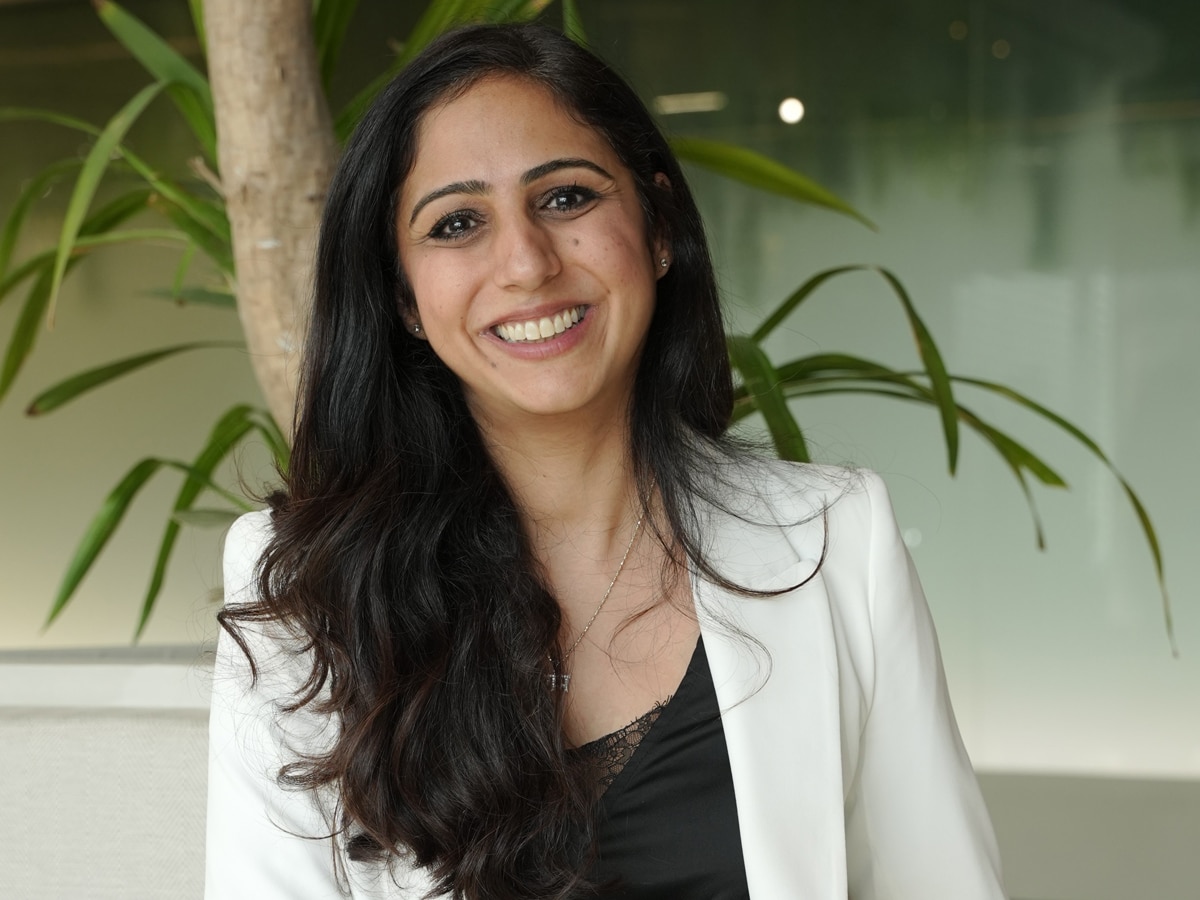
Roopal Jobanputra is general counsel at Core42, a G42 company formed last year to lead the UAE’s national-scale cloud and generative AI initiatives.
Here, she talks to Law Middle East about the company’s progress in its first year of operation as well as its plans for the coming year, the challenges facing law firms in an increasingly digitised world, and the benefits of a global AI regulatory framework.
Core42 was launched at GITEX Global in October 2023. How is it going one year on?
Yes, Core42 was launched at GITEX Global 2023 by G42 as the consolidation of several G42 entities into a unified cloud and AI powerhouse. Core42 is designed to provide the infrastructure that allows the UAE to not only compete but lead globally, ensuring that AI applications remain secure, scalable, and reliable.
A year later, I am very pleased to say that Core42 has made remarkable progress in establishing itself as a leader in sovereign cloud solutions and AI infrastructure. By integrating the digital transformation expertise of Injazat with the advanced computing capabilities of G42 Cloud, Core42 has created a comprehensive platform that tackles complex challenges across sectors.
Collaborations with other G42 operating companies, including Inception, Presight, Khazna, M42, and CPX have further enabled Core42 to be the frontrunner of digital enablement. These partnerships allow Core42 to deliver customised solutions tailored to the unique needs of public sector entities and industries that operate within strict regulatory environments.
Core42 has more than 100 partnerships with technology and AI companies, including Microsoft, OpenAI, and Cerebras, to name a few. How are you leveraging these partnerships to transform systems and processes for businesses globally?
Our extensive partnerships are instrumental in advancing digital transformation across sectors. For instance, our Sovereign Public Cloud leverages Microsoft Azure which enhances operational efficiency and ensures that businesses can innovate confidently while adhering to local data sovereignty goals.
Additionally, we leverage OpenAI to incorporate large language models (LLMs) and generative AI models in various industries, such as financial services, energy, healthcare, and public services. This allows businesses to deploy advanced language processing models for tasks like automation, chatbot applications, and content creation, providing innovative AI-driven solutions tailored to their specific needs.
Also, with NVIDIA, we provide unparalleled computing power with access to state-of-the-art hardware, such as DGX systems, designed to handle intensive AI and High-Performance Computing (HPC) workloads. The collaboration ensures enterprises based in the UAE can utilise NVIDIA’s AI hardware to enable high-performance computing for AI model training, data analytics, and large-scale deep learning. We have also extensively deployed Cerebras clusters in the US for training different generations of the JAIS family of models.
Through these partnerships we are able to create a heterogeneous, next-generation AI cloud that leverages multiple technologies and provide optionality, offering customers tailored solutions that deliver the best outcomes.
Which sectors are most ripe for AI disruption at present and in the near future?
AI and technological advancements are embedded in our daily lives, shaping industries, economies, and personal interactions in ways we could not have imagined even a decade ago. While AI is undoubtedly impacting every industry, it is sectors such as healthcare, finance and even legal that are particularly ripe for AI disruption.
Having moved in-house from private practice, what do you see as some of the biggest challenges facing law firms in an increasingly digitised world? How can they overcome these?
One of the primary challenges facing law firms today is adapting to rapid technological advancements while ensuring compliance with evolving regulations and maintaining client confidentiality. Legal firms should invest in continuous training on emerging technologies and adopt AI-driven legal solutions that automate mundane tasks, thus enhancing their efficiency and become more solution orientated in a cost-effective manner.
By fostering a culture of innovation and collaboration, similar to our approach at Core42, law firms can position themselves to thrive in this digital era by ensuring the delivery of legal services is aligned with the technological advancements of their clients.
In an era of rapid digitalisation inevitably comes risk—how can businesses ensure compliance and the responsible delivery of services at speed and scale?
To ensure compliance in a rapidly digitalising environment, businesses should implement comprehensive governance frameworks that prioritise transparency, accountability, and inclusivity.
Regular risk assessments, employee training, and leveraging automated compliance tools can further enhance an organisation’s ability to navigate risks while delivering services swiftly and responsibly.
It has been suggested that a single cohesive AI regulatory framework would substantially benefit the GCC. Do you agree?
I do agree, and not just for the GCC but globally. In this rapidly evolving space, a cohesive framework is essential to ensure fair and equitable AI advancements. In fact, the Global Policy for AI approved recently by the UAE Cabinet highlights the need to support the establishment of international alliances to govern, secure, and advance AI systems as well as support the implementation of international regulations that hold countries accountable for developing AI tools that could cause harm.
While implementing such a framework is not a simple task, good governance and responsible AI are already at the forefront of the AI community’s priorities including at Core42 which is fostering collaboration to find the right balance. The recent announcement of the G42 and Microsoft Centres for Responsible AI is a strong example of the industry moving toward achieving that balance.
If there was one tool you could invent to make your life and the lives of lawyers easier, what would it be, and why?
There are many great tools already in the market that the legal team at Core42 are trialling to reduce time spent on simple and repetitive tasks. However, a tool that could collate ecosystem precedents and provide negotiated positions would be transformative for streamlining time spent on frequently used agreements. Whilst challenges like client confidentiality would need to be addressed, the efficiencies gained with such a tool, especially in our fast paced and dynamic environment, would be significant.
Finally, what is coming up for Core42 in the coming year?
As Core42 marks its first anniversary, we celebrate a year of remarkable achievements and strategic partnerships in digital infrastructure and services. This milestone reflects not only the progress made in such a short span but also the foundation laid for future success.
Now, the journey ahead promises continued innovation, geographic expansion, and a lasting impact on the digital landscape.
Some of our key goals include expanding our regional and international footprint, enhancing our AI capabilities, and strengthening our position as the leading provider of sovereign cloud solutions in the region. We also aim to deepen our partnerships with local governments and enterprises while continuing to develop AI and cloud solutions that cater to the specific needs of the region.