
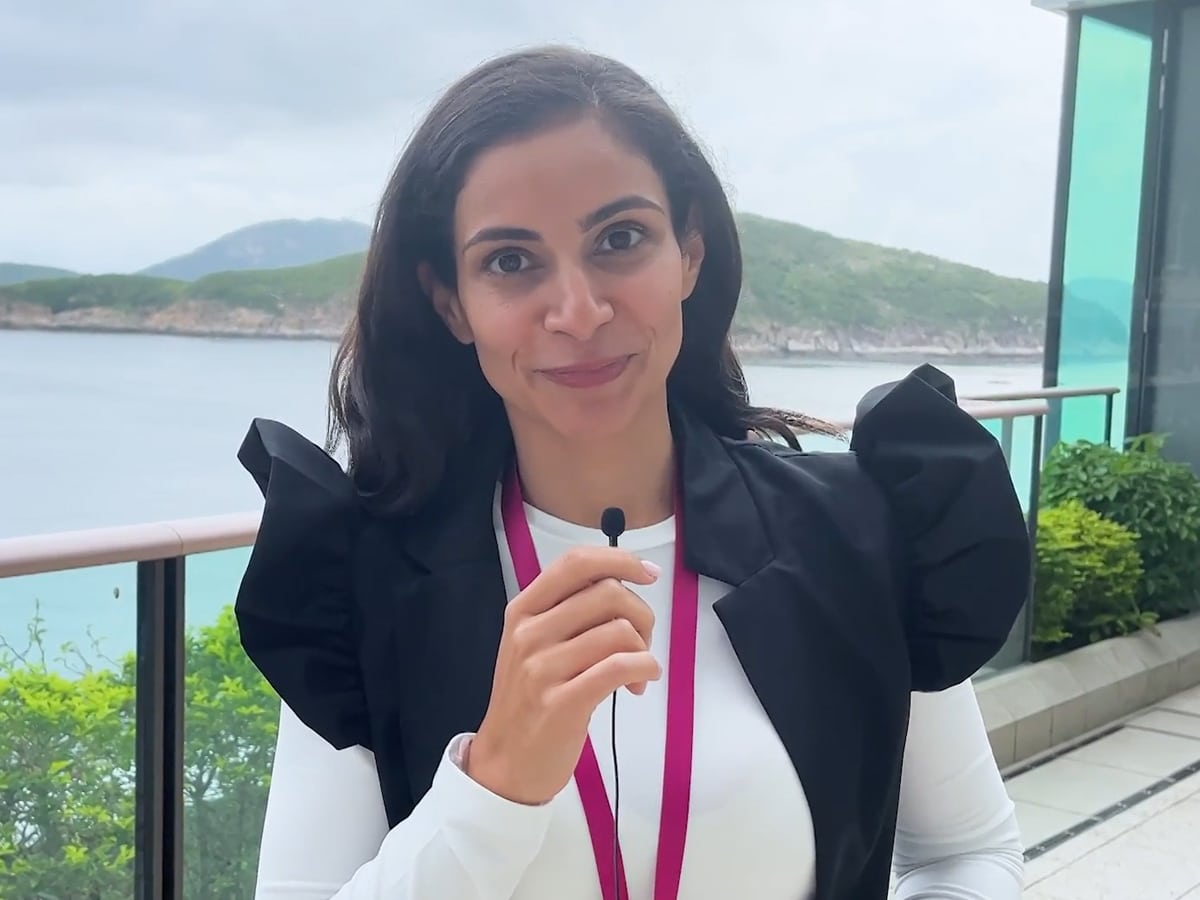

Reem Alsayegh is one of the first Emirati female partners at an international law firm. Based in the Dubai office of Linklaters, a UK-headquartered Magic Circle law firm, Alsayegh balances her busy transactional and financial regulatory practice with being a mother of three. In an exclusive interview with Law Middle East editor Aishah Hussain, she discusses how she made it, the challenges she overcame along the way, and her advice for aspiring lawyers.
“I am a Linklaters lifer—it is in my blood,” says Reem Alsayegh when we meet at the firm’s office in Dubai. “I joined the firm in 2009 and I have been here ever since.”
In that time, she has developed a successful practice in banking & finance alongside raising three children. What’s more, she has just started a project on social media where she posts relatable parenting content, delving in territory very few law firm partners have ventured before.
Her achievements are all the more remarkable when I come to learn she is the first Emirati female partner at her firm and one of the first at a Magic Circle law firm globally.
“There is a pride that comes with being one of the first—absolutely—but it is sad that it is the reality. And I became a partner in 2022,” says Alsayegh.
“The one thing that I really struggled with is looking up and seeing someone that looked like me or that had a similar cultural background to me, that was living a life that I could aspire to live, as in, there was no one that I would look up to and think, ‘yeah, I could do this, I could be a partner, I could have a family’, and I found that it was a real struggle, because when you do not have that visual evidence, you start to believe that it is not possible.”
But she was determined, and secured a place to study law at Trinity College Dublin, Ireland. She decided very early on that she would pursue legal practice after a debate arose during a lecture on the difference between law and justice. “I started to understand the law is so much more than just words written in a statute,” she reflects. “It is a formula that keeps society together.”
It is these principles that continue to guide her through her career—particularly when dealing with clients. “You are a caretaker of their interests, and when they are in a tough position, they look to you for guidance. That, for me, is the ultimate compliment.”
Alsayegh went on to study for a Master’s in Law at Cambridge University and commenced her training contract in the London office of Linklaters following completion of the Legal Practice Course (LPC). She spent a year in London during her training contract, followed by six months in Singapore and another six months in Dubai, where she qualified as an England & Wales solicitor in September 2011.
It was around this time she fell pregnant with her first child.
She pauses when I ask how she managed to juggle a new-born as a newly-qualified lawyer in the firm’s banking practice at a time when the global markets were recovering from the 2008 financial crash, and I can see, as she casts her mind back, this must have been a particularly challenging time in her career.
Yet, with the support from her supervisor, who she praises for encouraging regular check-ins, she made it work.
“It is people like that who make up this firm—people who are committed to your development who genuinely want you to succeed because your success is their success,” she says. “I love this place. I am completely devoted to this firm! A firm is nothing more than the sum of its people, and it is these people and these partners that are just family.”
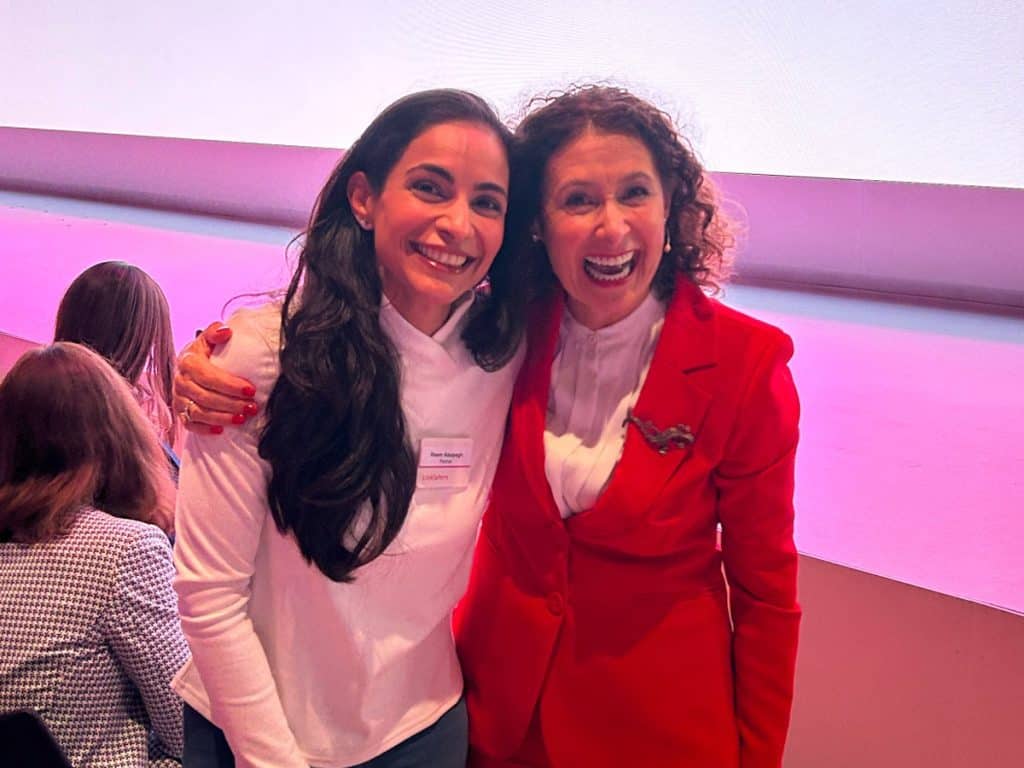
Linklaters opened its first Middle East office in Dubai in 2006. The firm expanded from its base in Dubai to Abu Dhabi in 2011 and Riyadh in 2023. “It is nice to be a part of our story from the very beginning,” she says. “Our strategy on growth as a firm is very measured. We grow and expand and adapt to market needs—that is what saw us enter Saudi Arabia.”
The local banking team covers both conventional and Islamic finance. Alsayegh is one of three partners in the team who handle matters ranging from corporate to real estate, restructuring and insolvency.
“Our local banking team has a deep wealth of experience—between the partners, that is over 40 years of experience in the UAE,” she says. “All of our partners are based in the Middle East and committed to the region.”
The financial regulatory group is housed within the banking practice, which Alsayegh spearheads for the Middle East. She mentions financial regulators must keep pace with developments in emerging technologies such as artificial intelligence (AI), particularly in the UAE which has witnessed large-scale legislative reform, and notes how these developments are changing how people make investment decisions, assess risk, and even have access to the financial system.
“We are on the cusp of a digital transformation,” she says. “I think lawmakers and regulators need to be ready for what is to come, because everything is changing, from how we deliver legal advice to how financial institutions provide services.”
Another industry ripe for change is Islamic finance, which Alsayegh specialises in and helps lead for the firm. She envisions there will be more consolidation of positions in Sharia law driven by investor demand.
“At present, the positions of banks and scholars can be quite diverse, but what I see is schools of thought starting to converge and come together,” she says. “There is just so much liquidity that is being driven by Islamic investors that ultimately, we are being forced to create Sharia-compliant solutions because the demand is there. That will start to inform a pattern of behaviour going forward, where Islamic finance becomes more prevalent and more user-friendly and more competitive.”
Alsayegh had two more children again at pivotal points in her career; when she was promoted to managing associate in 2016 and to counsel in 2019.
The mother-of-three encourages law firms to have open and honest conversations with staff around the demands of balancing work with family life, particularly in this part of the world.
“What I think is missing out there is genuine conversation, a dialogue, because people are so scared of talking about this issue that nothing actually ever gets resolved,” she says. “The most meaningful and productive conversations that I have had in terms of career progression have always been open and honest conversations where I could talk about my family situation.”
It is one of the reasons why she has just launched her “passion project”, ‘Lawyer, Boss, Mom’, on Instagram and TikTok, where she shares her personal stories to highlight the struggles faced by working mothers.
“What I want to do is to normalise it being hard, that it is not easy, and that these things are very difficult and sometimes insurmountable, and you get overwhelmed,” she says. “Once you normalise that, you change the narrative.”
“It is not about being a super mom,” she adds. “It is not about doing everything perfectly. It is not about having the picture-perfect family. It is about being real.”
“I get asked so many questions from other female associates at various levels across the firm, how do you do it? What are some of your tips? How do you have it all? I hope that if it changes even one person’s perspective about the difficulty they face being a working mom, then that is a win for me.”
Some of the snippets she will share include her journey on the partner track. When Alsayegh made partner—a significant milestone, marked by a shift in responsibilities, authority, and financial stake in the firm—she admits it took some adjustment.
“It is a real shift in terms of your role,” she says. “No one really prepares you for partnership.”
“The dynamics change—the things that make you a good candidate to become a partner kind of end when you become a partner.”
“You are no longer judged on your execution,” continues Alsayegh, who is involved in several of the firm’s female leadership programmes. “You are judged with different parameters, and it does take people time to adjust—going from the executor of the transaction to the supervisor of the team executing the transaction—that is when skills, like team management, mentoring, and training, come into play.”
Alsayegh, who is the know-how partner for the Dubai office, taking care of training and development, adds: “I take training very seriously. It is part of the responsibility of being a senior member of the team.”
Efforts are underway at local universities and law firms to overhaul law degrees and increase job opportunities for graduates. Linklaters is one of the largest training providers globally and Alsayegh is very firm on the role law firms should play in shaping future lawyers.
“It is not the job of universities to create good lawyers—it is the job of law firms,” she says. “Every law firm will have its own style and needs, and what a legal education should do is teach basic skills around analysis and critical thinking and logical writing.”
Having trained at the same firm she is now a partner, Alsayegh encourages aspiring female lawyers to believe in their abilities and find an effective support system that works for them.
“I feel a lot of pride to be here, having come through the system, and just evidence that it works,” she continues. “If you work hard, you will be rewarded, but there are sacrifices to be made.”
“It took 15 years to get here, but you grow your talent internally, and then you launch them into the world and watch them fly.”