

In partnership with Youssef + Partners
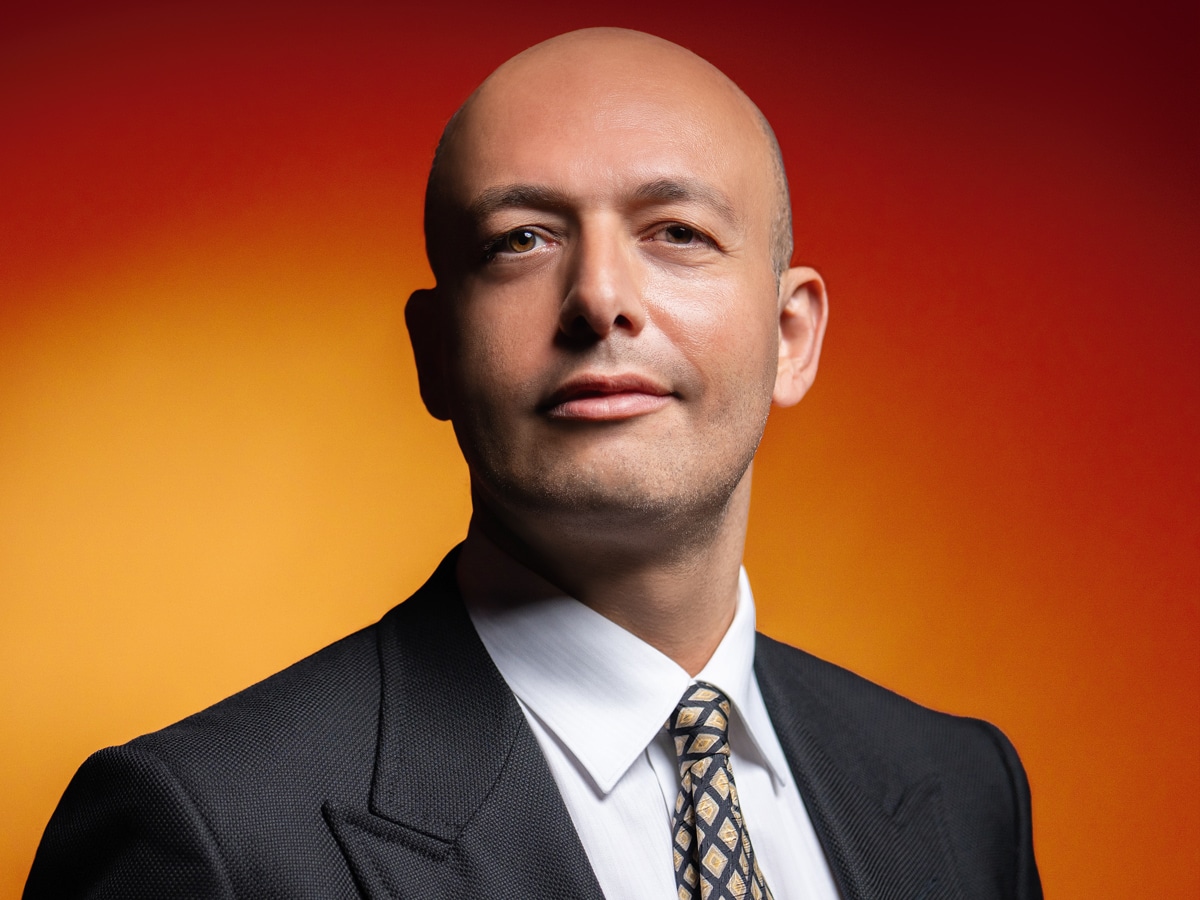
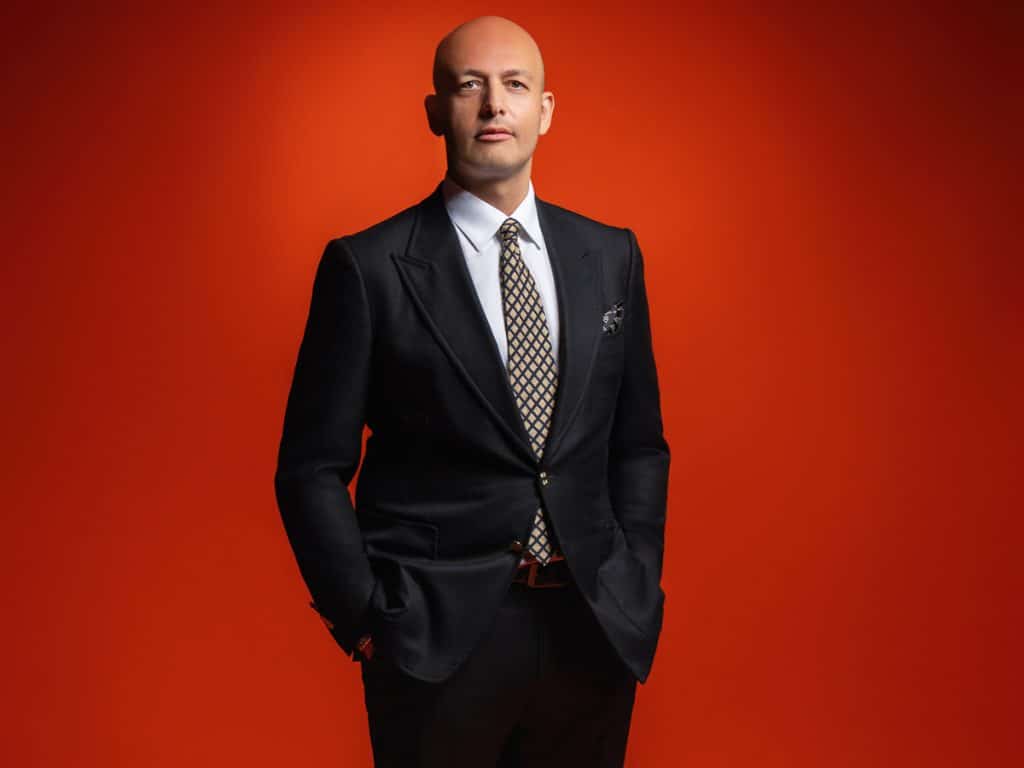
For most, a legal career unfolds through a predictable path—law school, followed by a gradual search for one’s specialty. But for Karim Abou Youssef (known as Karim Youssef), founding partner of Youssef + Partners, Cairo’s premier arbitration firm and a leading regional player, his calling was almost preordained. “I went to law school in order to do arbitration, usually it is the other way around,” he tells me when we speak.
A formative education and early career
Born in Egypt in the late seventies, Youssef hails from a distinguished lineage of judges. His father served as a career judge and the vice president of Egypt’s Council of State, while his late grandfather, Justice Farouk Seif El Nasr—commonly venerated as the bench’s elder statesman or the “dean of the judges”—was a revered figure who headed Egypt’s Supreme Constitutional Court (SCC) before serving as Minister of Justice of Egypt for more than 17 years, between1987 until 2004.
It was in his grandfather’s library, at age 16, that Youssef discovered a book titled The Foundations of Law by Abd El-Razzak El-Sanhuri—a moment that would shape his destiny. Captivated, he read through the night into the early hours of the morning, igniting a lifelong passion for the law.
Just two weeks before he was set to begin medical studies in Strasbourg, France, Youssef’s newfound calling changed everything. He embarked on a dual legal education, simultaneously enrolling in Cairo University’s newly established English law department in 1994—where he was classmates with Law Middle East April cover star Ibrahim Ahmed—and Paris 1 Panthéon-Sorbonne University for the French law degree. “The process was gruelling—I worked through winters and summers, pretty much non-stop. But in the end, I earned two law degrees in four years.”
“I recall the dean of my law school at the time, Samir El Sharkawy, a timeless figure of commercial law and international arbitration in Egypt, telling me that the only other person who earned two law degrees at the same time was Egypt’s historic figure Mostafa Kamel nearly a century earlier,” he adds.
Youssef’s academic pursuits continued with two master’s degrees—one from the Sorbonne and another from Yale University.
In 2007, he became the first person from Egypt, and the Arab world, to receive a JSD (Doctorate in the Science of Law) from Yale University. He was mentored by the legendary international law scholar Michael Reisman, and he later authored a book on complex and multi-party arbitrations prefaced by Jan Paulsson “who is the Diego Maradona of the field”, Youssef enthuses, referencing the iconic footballer.
He began his legal practice that same year, starting with a formative stint at Cleary Gottlieb in Paris. There, he worked, among others, on landmark investment treaty cases, including the Argentina bondholder disputes following the 2002 pesos crisis and the largest ever international arbitration (Yukos v the Russian Federation).
In 2010, he returned to Egypt—just months before the Arab Spring erupted—poised to play a pivotal role in shaping the future of arbitration across the region.
A ‘boom time’ for Middle East arbitration
The Arab Spring, perhaps unexpectedly, acted as a powerful catalyst for the transformation of international arbitration across the Middle East. “It triggered very deep changes in the legal field,” Youssef explains, resulting in a “complete and irreversible shift in how arbitration is practised, the volume and scale of cases, and the very fabric of the arbitration community itself”. Suddenly, ‘arbitration’ was making headlines and entering popular discourse, as the region witnessed an unprecedented surge in high-profile cases. “The decade of the Arab Spring marked the moment when ‘arbitration’ became a buzzword in Egypt and across the Arab world,” he adds.

This momentum only intensified in the wake of the Covid-19 pandemic, catapulting cities like Cairo, Riyadh, Abu Dhabi, and Dubai onto the global stage as premier arbitration hubs.
In the past two years, the growth of arbitration in the Middle East and North Africa (MENA) region has accelerated at an unprecedented pace. New institutions such as the SCCA in Riyadh have witnessed “explosive growth”, while rejuvenated centers like DIAC and ADGM in Dubai and Abu Dhabi are increasingly recognised by leading practitioners as “world-class”, according to Youssef. In 2024, Cairo’s CRCICA introduced new rules, reaffirming its pivotal role amid intensifying regional competition. Meanwhile, Bahrain has rapidly established itself as a vibrant new hotspot, boasting the BCDR arbitration centre and BCDR courts— and earning a reputation as the “Switzerland of the Gulf.”
In short, the region’s arbitration landscape has been utterly transformed over the past decade. “It is truly a boom time for arbitration in the Middle East,” Youssef notes, emphasising that in Dubai, arbitration is not only flourishing but is also “strategically integrated into the city’s D33 economic agenda”.
Indeed, the region is fast emerging as a global powerhouse in dispute resolution, drawing acclaim, and setting new benchmarks for excellence and growth, “but the journey is far from complete—there is still much to do, and much to achieve”, continues Youssef. “In today’s fiercely competitive global landscape, we must never settle or become complacent; there is always more and better. It never stops.”
The allure of international arbitration
For Youssef, the appeal of international arbitration is deeply multifaceted. “It is incredibly cosmopolitan—a truly international community unlike any other. In our practice, you not only build professional networks but also form genuine friendships with peers you see regularly. I am fortunate to have many lifelong friends in the field, spanning different age groups and hailing from the four corners of the globe.”
The practice offers a truly international lifestyle. Since the start of the year, his work has taken him to dynamic cities such as Dubai, Abu Dhabi, London, Qatar, and Bahrain, among others. Today, he explains, your typical large-scale international arbitration involves hearings held in cosmopolitan venues, where the proceedings bring together parties, counsel, arbitrators, and experts from multiple jurisdictions. It is not uncommon for a single case to involve seven or eight nationalities and the interplay of several different legal systems—for example, English law, Swiss law, and the laws of the Middle East all at once. This convergence of cultures, legal traditions, nationalities, and backgrounds demands a “special breed of international lawyers,” he says, adding:
“This is why succeeding in international arbitration is hard if you do not embody the very qualities the field represents: you must be truly cosmopolitan. You need to possess that certain je ne sais quoi that sets you apart and makes you different.”
Forging a new path
In April 2016, Youssef took a bold step by founding Youssef + Partners in Cairo. Motivated by a desire to disrupt what he saw as a traditional and slow-moving legal market, he recalls: “There was a real sense of stillness in the market, and I wanted to change that.”
“When I returned to Egypt, nearly all my friends and mentors asked, ‘Why did you return?’ But I was convinced that it was possible to create something new and truly different in beloved Cairo. I believed you could be as global as it gets—while still building from your hometown.”
“As the great Georges Abi Saab once told me, ‘You can practise international law from anywhere, but your roots are always there and they continue to define you’. This, I believe, is the true essence of cosmopolitanism: embracing the world beyond you while remaining deeply connected to your own roots,” he says.
He envisioned a firm that would redefine the private practice landscape and offer a new generation of lawyers a local platform “indistinguishable from international law firms in terms of the work and the way it is done”. His goal was to create world-class opportunities for talented lawyers—allowing them to thrive at the highest level without ever needing to leave their home country, as he once did.
The firm’s Cairo office, personally designed by Youssef, mirrors the aesthetic and class of leading US and UK law firms and was even featured in the Arabic adaptation of the US legal drama Suits, known as Suits: Arabia. Notably, Youssef himself made a cameo appearance in the series, playing himself, with the renowned Arab actress Siba Mubarak introducing him on screen with the words, “he needs no introduction”.

Youssef is quick to emphasise that, while the firm’s culture is demanding and results-oriented, it is also forward-thinking and deliberately steers clear of the traditional big law mentality of relentless overwork. Instead, the firm cultivates a dynamic and engaging environment, recently implementing a four-day work week during the summer to enhance wellbeing.
Perhaps a defining characteristic of the firm is its singular focus. The firm exclusively handles arbitration and litigation matters, with only minimal corporate work for existing clients. This sharp specialisation distinguishes the firm in a market where most arbitration practitioners juggle multiple practice areas and have a broader palette.
This sharp focus means the firm forgoes the cross-selling advantages enjoyed by full-service firms. “In most firms, arbitration work primarily comes from established corporate clients, so launching a boutique arbitration practice independent of a corporate arm was a bold move.”
This shift aligned with a global movement: boutique law firms specialising in arbitration were emerging and reshaping the global arbitration landscape. Youssef + Partners led the charge in the MENA region, proving that deep expertise—not a broad service menu—drives results. CEOs and general counsel soon recognised that the top choice for corporate matters is not always the best for disputes. The age of the one-stop-shop was waning; specialisation had become the key to winning in arbitration.
Winning for clients
Youssef + Partners has a proven track record of delivering outstanding results for its clients. “Winning is not just a goal for us—it is a mindset,” he explains. “We immerse ourselves deeply in every case, and the team becomes an integral part of the client’s journey to success.”
“We take each case personally—in the best possible sense. I call it ‘positive obsession’. This is what empowers us to excel in the courtroom and consistently deliver outstanding results,” he continues.
“Clients come to us for the tough cases—the ones others might avoid—and we often prevail against the odds. It is always a big responsibility because your efforts as counsel contributes significantly to millions of dollars moving right or left.”
He also explains the impact of some of the big cases often extends far beyond the immediate parties or the outcome in the hearing room. A landmark award can set a precedent that shapes the entire industry, or influences how future disputes are resolved. For instance, he cited the ‘Bassem Youssef’ arbitration—the largest and first media broadcasting dispute of its kind in the MENA region—which sent ripples through the industry for years to come.
“Many of our cases, to our pride, come from former opponents who, after seeing us prevail, later choose us as their counsel,” says Youssef. “They saw us in action. They were impressed. They respected us.”
Leadership and looking ahead
Youssef’s leadership style is focused on empowerment and humility. “Build a team so strong it is impossible to know who the boss is,” he advises. “The team should work as a fighting unit,” says Youssef, who in his spare time undertakes Aikido—a Japanese martial art he began practising while pursuing his JSD in New Haven in 2002.
“Yes, my name is on the door and in the submissions, but I always make sure it appears last—after every lawyer, even the most junior,” he explains. The firm thrives on a dynamic, youthful team, and Youssef is deeply committed to nurturing their independence. “We foster a culture where merit and excellence are non-negotiable—mediocrity has no place here.”
“I never impose deadlines; everyone is expected to self-manage and deliver their absolute best, no reminders needed,” he adds.
Looking ahead to 2026, which marks the firm’s tenth anniversary, Youssef envisions sustained and purposeful growth. “We are growing fast, but always organically,” he says. “We are not over-engineering our growth. Building strength is as important as building size. This is why the GAR 30 features a select group of agile, high-performing boutique law firms—lean, dynamic, and relentlessly effective.”
Youssef is keenly aware of the pitfalls that can accompany rapid expansion. He cautions that “many firms fall into the trap of wanting to add numbers to the team simply to tick a vanity box, but this approach will most likely leave the team weaker if such growth is not backed by a genuine, natural imperative to grow”.
When asked whether he is considering expanding into the Gulf Cooperation Council (GCC) region, he replies thoughtfully, saying:
“In the years ahead, geographical boundaries will fade even more, and where your arbitration practice is located will become increasingly irrelevant. Yet, I am always open to possibilities—so, never say never…”
Words of wisdom
As the only Middle Eastern and arbitration lawyer on the prestigious Harvard Law School advisory board, where he helps shape the future of the global legal profession, Youssef—hailed by Legal 500 as a “leading light of international arbitration”—stands as a beacon of inspiration. His journey provides invaluable lessons for those who aspire to leave a mark on the world of law, rising lawyers, and seasoned professionals alike.
“Do not over-engineer your career,” he advises with conviction. “Embrace the journey, go with the flow, and focus on the process rather than obsessing over the outcome.” His words resonate as a call to authenticity and adaptability in a rapidly evolving legal landscape. “Never imitate or copy others. You lose the imitation game the moment you start playing it. Instead, pursue your own path. Do your own thing. Most importantly, do not take yourself too seriously and enjoy the journey.”
Reflecting on the qualities he values in colleagues, team members, and close allies, he says: “I admire humility and a relaxed attitude. In this field, your average practitioner is impressive, and the top players are true giants—yet the very best remain humble and never take themselves too seriously. So, pursue success relentlessly, but stay grounded, and keep perspective. Our community’s collective psyche and unwritten rules naturally sideline and push to the periphery those who lack this spirit.” Further, he emphasises that a growth mindset is essential. “It is also what keeps you growing. The moment you think, ‘I have made it’, you stop striving, you stop learning and you lose your edge.”
Youssef underscores the vital importance of choosing the right firm and, above all, the right boss. “Above everything, choose carefully who you work with. That is my golden advice. The people around you—your boss and colleagues—can either elevate you or hold you back. Your workplace should be a launch pad to greatness, not a weight that drags you down. Choose wisely; your professional future is shaped by this one decision more than any other.”
“The one thing you want to avoid is the scenario of an enemy from within,” he cautions. “Your energy, focus, and firepower must be directed outward, toward the real challenge: your opponent.”
This article was first published in the June 2025 print issue of Law Middle East.