

The Middle East has a significant concentration of the world’s wealth. For lawyers advising high-net-worth individuals (HNWI) and families in the region, success hinges on having a deep understanding of local cultural practices and emerging trends such as digital assets.
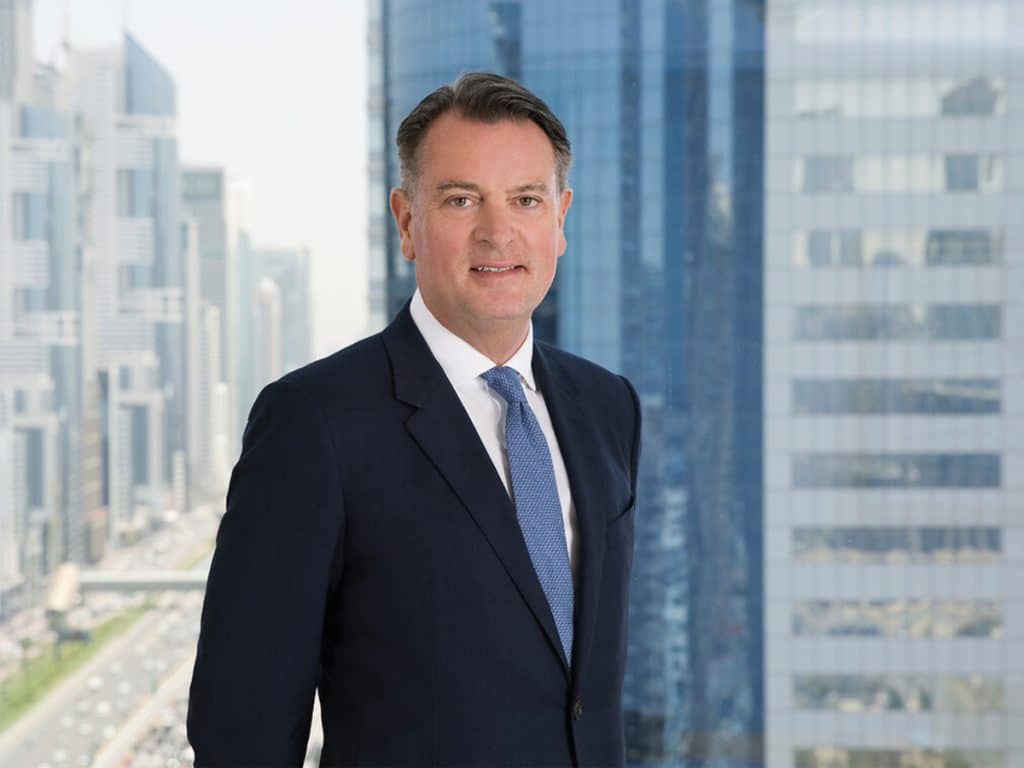
Ronald Graham, the managing partner of Taylor Wessing’s Dubai office and head of the firm’s UK private wealth practice, draws on his experience advising clients in the Middle East since 2005. He discusses their unique legal considerations, and highlights the priorities, challenges, and opportunities shaping their wealth management strategies.
What are the primary legal needs of high-net-worth individuals and families in the Middle East?
Ronald Graham: People often ask me this question, and honestly the needs of individuals and families in the Middle East are really the same as anywhere else in the world. First and foremost is to ensure that family wealth does not disrupt a harmonious and loving family. Asset protection, safety, confidentiality and minimising tax exposure have become far more important in recent years as has a general awareness of succession and the need to consider and implement structures such as offshore trusts and local foundations to assist with the continuity of business ownership and to affect a smooth transfer of assets to future generations. Regional families of significant wealth want to be low profile in terms of wealth and extremely well advised on their assets, tax, and succession.
How has the increasing focus on economic diversification in the region impacted the private wealth sector?
RG: The regional economic diversification has encouraged individuals and family offices to embrace the opportunity to diversify their investments away from traditional oil and gas and commodities into technology, alternative energy, hotels and hospitality, sports club ownership, life sciences and health care and e-commerce. It is a great achievement of the region to have moved from one where new business concepts were always imported to one where we now see fintech businesses expanding globally and Dubai restaurant concepts moving into European key cities such as London and the US. The private wealth sector is often better placed to adapt and move to embrace these opportunities than institutional funds. I also feel that the region’s patent enthusiasm for economic diversification is to be commended and is well supported by the local private wealth sector. We have every reason to believe this will continue.
What role do cultural and religious considerations play in structuring private wealth in the region?
RG: These considerations are of great importance in the region. You cannot be a private wealth adviser in the region without a good understanding of Shariah law. I was fortunate to have a local Muslim friend who has been kind enough to patiently teach the key aspects of the law and local culture to me and I feel that I now have a good understanding of the wishes of a Muslim family considering succession planning knowing what is possible under Shariah law. For any adviser to attempt to do this without a good understanding of Islam and local cultural practices is to be tone deaf in advising on such matters. It is also a privilege to be more aware of such matters. They impact not just on generational transfer but suitability of family structures, governance, investment classes and local business practices.
With the rise of digital assets and cryptocurrencies, what new legal challenges and opportunities are you encountering in your practice?
RG: This is an exciting but daunting area for private wealth advisers, particularly for asset and wealth managers and trustees. The interest from the private wealth community, particularly from second and third generation members to have at least some of the family wealth invested in digital and cryptocurrencies is significant. As legal advisers, we have upskilled members of the team to be able to advise on the different aspects of digital assets such as title, regulation, transfer etc. But I know that for wealth advisers it is a real challenge for them to advise on digital assets given the high volatility of this class and also for trustees, given their prudent fiduciary duties, to try to include crypto into a trust or foundation structure. That said, we are in a client service industry and as our clients demand these assets, we must all raise our games to be able to advise on them and how they are held. Personally, I do feel this is still a nascent asset class and the regulatory framework is evolving to protect (some would say to hinder) investors and owners.

How is the growing emphasis on environmental, social, and governance (ESG) factors influencing private wealth planning and investment strategies?
RG: This is an interesting and highly topical area not least given very recent changes in the other direction in the US. We note the changes in the ESG and diversity policies of some of the largest companies, banks, and law firms with US exposure. That said, most families we work with have a varying interest in ESG matters. A few want all of their investments to be in sustainable businesses and regard ESG ratings are critical for investments—putting those priorities ahead of capital or income returns. However, the vast majority are still far more focused on a broad spread of risk and considerations such as yield and capital growth rather than ESG. ESG matters can also be considered part of an organisation’s culture and as a result some organisations can be found to be too liberal to too focused on ESG matters for some regional families. While the interest is definitely growing for ESG to be a factor in engagement and investment in truth it is often overplayed in the media compared to the reality in terms of significance for individuals and families.
What are some of the common sources of disputes in private wealth matters, and how do you advise clients on mitigating these risks?
RG: While families do usually work harmoniously with love and trust at the heart of the family ethos, we do sometimes unfortunately see disputes arising. The most obvious source of dispute, chaos and delay is where a patriarch passes without a will or any succession planning in place. Mitigation of this can be as simple as a will being in place for every jurisdiction where that person owns assets.
Other sources are a confusion between ownership and management, individuals who are shareholders or beneficiaries of a structure thinking this entitles them to manage a family business or benefit financially or otherwise from the business. Also, a lack of legal agreement or understanding within a family can give rise to disputes as can governance. Perhaps where one child takes on the role of running the family business and is then challenged by his or her siblings on poor performance or key decisions. Family members placed in roles they are unsuited for in a family business can lead to discord. Disputes also arise with intermediaries, private banks and wealth managers where a portfolio has performed poorly; trustees whose service is challenged or where beneficiaries are unhappy with how the trust is being run and level and frequency of distributions. Mitigation of most of those risks can be through a good and, I must emphasise, practical family governance agreement. We have seen all too often lengthy and expensive family governance documents usually created by management consultants or the Big Four accountancy firms, lying unopened in a drawer. For banks and trustees, clear communication with families and avoiding misunderstanding of expectations can avoid disappointment or worse.
What trends and opportunities do you anticipate within the private wealth sector in the next few years?
RG: I am delighted to see more gender diversity in family businesses and the importance of this for families. Women are now highly educated and although there is more to do in female representation on boards and in senior roles, I welcome seeing more women in senior roles within families and in private wealth intermediaries.
I definitely see greater interest in asset diversity. Yes, there will always be the need for a well-managed prudent security portfolio with a quality private bank or asset manager but we already see more interest in investment with hedge funds and in alternative asset classes—particular types of real estate such as student accommodation, elderly care, hospitals, solar farms etc. Other alternatives that have performed well in the last decade include venture capital funds, fashion and luxury brands, art and car collections, and crypto and digital assets.

The world’s wealthy are more mobile and willing to move jurisdiction to live than ever before. With the negative impact in the UK from recent tax changes, and indeed the high taxes of other European jurisdictions impacting on the private wealth community we have seen an unprecedented number of high and ultra-high net worth families moving to the UAE. Dubai has always been popular but Abu Dhabi is increasingly so. Families move not just for fiscal reasons of course and personal safety is hugely important. We have noticed the reference to personal safety from our clients and the admirable safety rating of the UAE has undoubtedly been a positive factor that will continue to encourage migration to the UAE.
What advice would you give to law firms looking to expand their private wealth practice in the region?
RG: This is one of the fastest growing and most dynamic regions in the world for private wealth advisers. We have all seen the estimate of a trillion dollars to be transferred over the next few years from individuals who created this wealth in the region to the next generation. That said, the Middle East is not a region to open a law office, send over some of the team from Europe and hope it works. The market is very different from European and Asian cities and the personality, understanding of local issues and skill-set of those leading the teams and in senior roles is critical. The private wealth market in Dubai and Abu Dhabi is still relatively small compared to the UK, US, or Switzerland, and I am often struck by how genuinely friendly, collaborative and respectful the community is to one another, more than one might find in the UK or US. The business and social interaction with clients and intermediaries is also far greater and those uncomfortable or unwilling to embrace this aspect would be well advised to stay at home. That said, the era of the poorly acclimatised suitcase adviser visiting three or four times a year is declining, clients have a right to expect their advisers to be world class and to be based in the region.
This article was first published in the May 2025 print issue of Law Middle East.