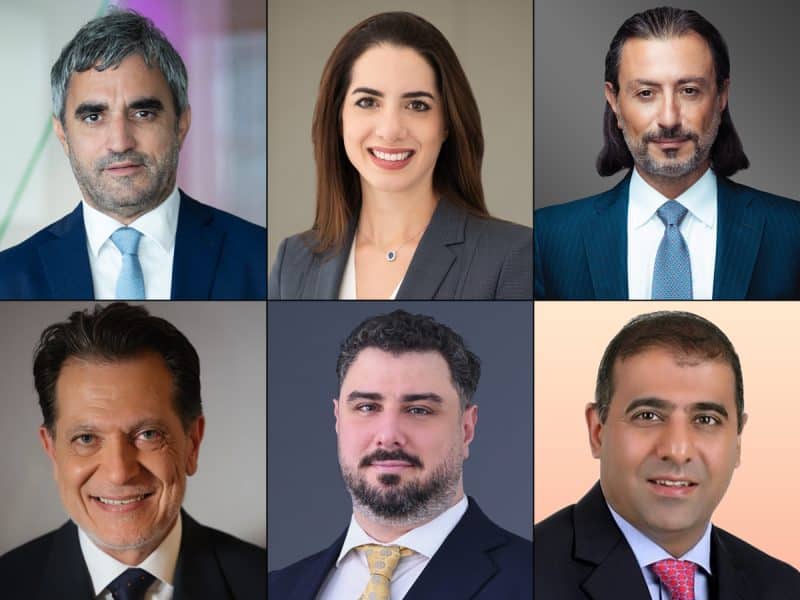

Once viewed as risk managers at the end of the chain, today’s general counsel are embedded deep in corporate strategy, often shaping it. From technology to energy to hospitality and construction, GCs in the Middle East are stepping beyond legal review to drive expansion, manage uncertainty, and influence boardroom decisions.
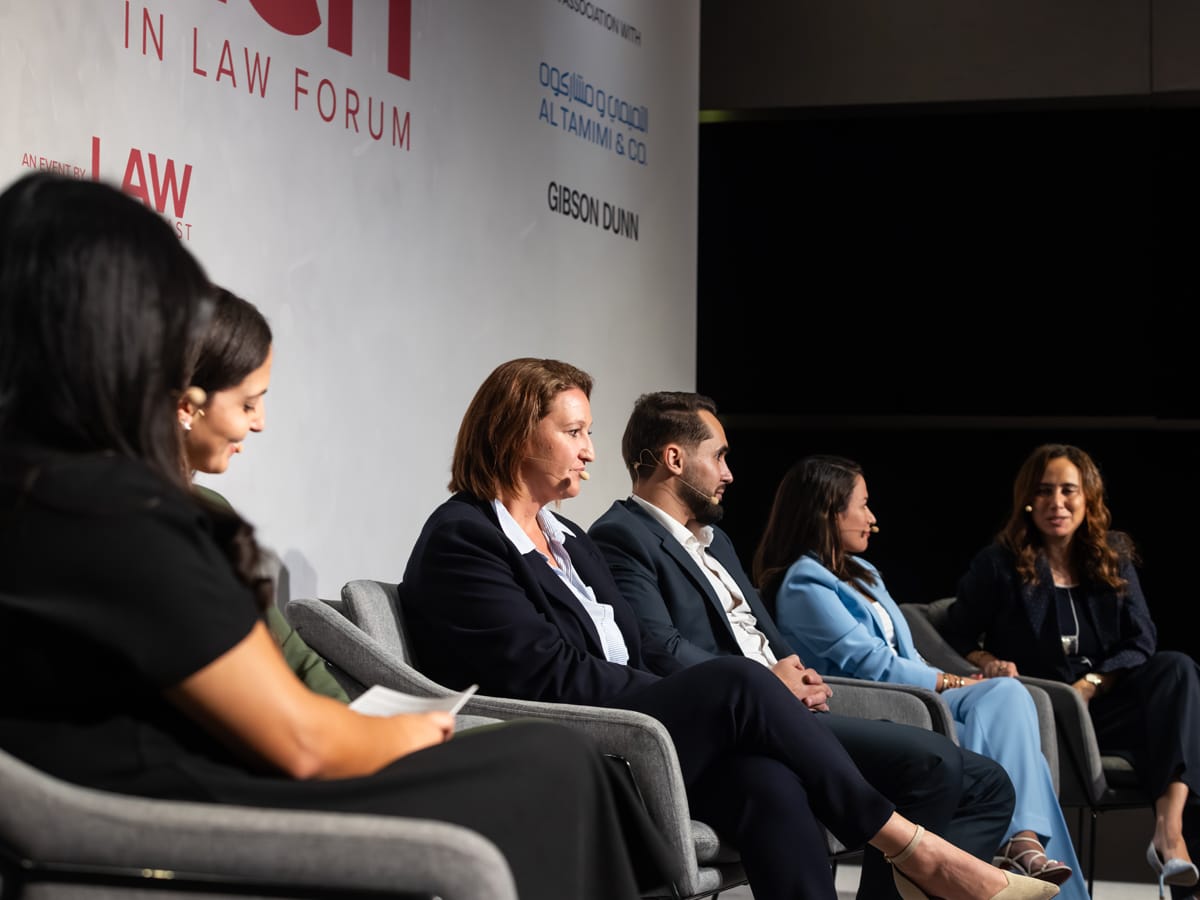
At the inaugural Women in Law Forum, general counsel from ADNOC Group, Careem, Drake & Scull International, and Sunset Hospitality Group reflected on how their role is evolving, and why collaboration, clarity, and culture are now central to legal success.
The speakers
• Careem general counsel Daniela Bartolo
• ADNOC Group senior vice president & general counsel, group legal commercial & operations Danielle Brownrigg
• Drake & Scull group general counsel Ahmed El-Bayouk
• Sunset Hospitality Group general counsel Maude El Khoury
• Al Tamimi & Company antitrust partner Mariam Sabet
Moderator: Law Middle East editor Aishah Hussain
The leap in-house
Each general counsel on the panel took a different path into their role, but all shared one common point: it was not the title that attracted them. It was the opportunity to lead, to learn, and to shape business decisions from within.
“There was not much thinking behind it… I was interested in tech, and said, yeah, why not?” said Daniela Bartolo, general counsel at Careem, who joined the company over seven years ago. She moved in-house directly after finishing her training. “It gave me a bit more immediate, practical insight into how to build a team… and what the CEO needs,” she said. Bartolo joined Careem when it was still a regional ride-hailing platform. Today, she oversees legal, safety, security and compliance across a diversified business offering 16 different services across core markets. That growth shaped her evolution as a GC. “We had to pivot during Covid-19, then restructure after the Uber acquisition, then split again,” she said. “Every shift forced us to build from scratch and think differently.”
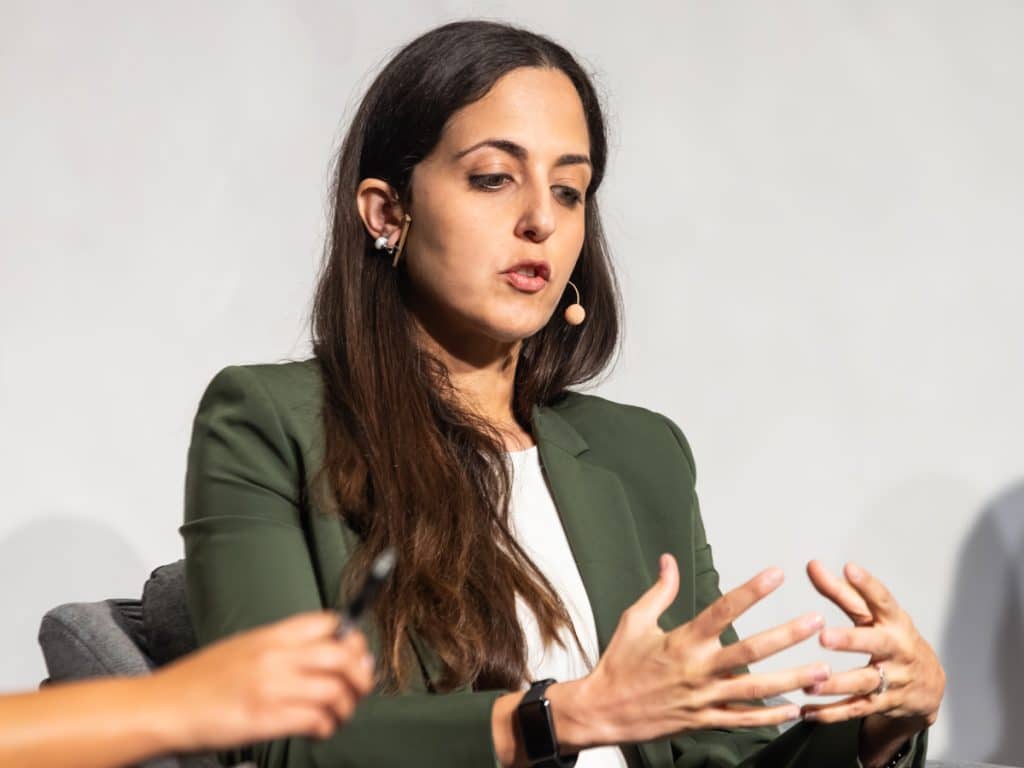
For Danielle Brownrigg, senior vice president & general counsel, group legal commercial & operations at ADNOC, the motivation to move in-house was curiosity. “I always wanted to know what happened after we did the work,” she said. Brownrigg joined ADNOC a decade ago, just months before the company’s current CEO began a full-scale transformation of the organisation. “We had to persuade people that change was not criticism—it was evolution,” she said. “That was a hard learning curve. But it taught me a lot.”
Ahmed El-Bayouk, the newest GC on the panel and its sole male representative, recently left Dentons to become group general counsel at Drake & Scull. He admitted the decision surprised even him. “I still wake up every morning and wonder what triggered the decision to jump over,” he said. “The longer we stay in our specialisms, the more comfortable we get. This was about stepping out of that.” El-Bayouk went on to highlight what drew him to the role: ownership. “I wanted to see the lifecycle of a dispute or a deal—from before it starts to long after it ends.”
For Maude El Khoury, general counsel at Sunset Hospitality Group, private practice was never part of the plan. “I always wanted to help companies build legal structures that prevent problems, not just solve them,” she said. She joined Sunset when it operated just 12 restaurants. Today, the group spans 27 countries, with nearly 90 operations and plans for 20 hotels by 2026.
Mariam Sabet, antitrust partner at Al Tamimi & Company, joined to represent private practice on the panel. Her take on moving up the ladder was direct: “It takes a village to make partner. But once you decide you want it, you have to be surgical in your choices,” she said. “If something does not fit the plan, do not do it.”
GCs as strategic leaders
In-house lawyers have long fought against the perception of being the function that says no. The panel made it clear: those days are over.
“At first, it was like, fine, legal can be here—as long as you do not ruin everything by saying no,” said Brownrigg, recalling the early years at ADNOC. “Now people actively ask: where is legal? Not just for legal advice, but for strategic input.” Brownrigg sits on ADNOC Group’s tender board, alongside a dozen Emirati executives. “Lawyers are often the only ones in the room who have read everything,” she added. “That builds credibility.”
Bartolo agreed: “We are the moral compass of what doing the right thing means,” she said. “How we structure a deal can define the next chapter of the business.” Her legal team at Careem is expected not just to review contracts, but to help shape product, pricing, and regulatory strategy across jurisdictions.
At Drake & Scull, El-Bayouk said the GC’s job now includes shifting internal mindsets. “We are changing the culture. Legal is no longer the department people come to at the end—it is part of the discussion from the outset,” he said.
For El Khoury, the transformation has been more visible. “The business sees legal as a partner, not just a function,” she said. “Because the last thing you want is to secure a deal and not be able to open.” That partnership model, she explained, goes beyond deal execution. “When you are entering a new jurisdiction, it is not just about the contract. It is about long-term success. That starts with legal being in the room early.”
What GCs want from external counsel
One clear message from the panel was collaboration between in-house and external counsel has to evolve, and fast. With legal departments increasingly embedded in business strategy, they need advisors who are efficient, commercial, and tuned into their operating environment.
“Do not send a 20-page memo. If I am presenting to the board, give me what I can actually use,” said Brownrigg of ADNOC. “Law firms that tailor advice to how it will actually be used—that is the difference.” Bartolo from Careem echoed this point. “If you cannot support the commercial context, just say so early. That honesty helps build lasting relationships,” she said.
“Law firms that tailor advice to how it will actually be used—that is the difference.”
—Danielle Brownrigg, ADNOC Group
At Sunset, El Khoury stressed the importance of giving law firms clear instructions from the outset. “It is our job to make sure they understand what the advice is for. If we do not furnish that context, we cannot expect tailored advice.”
Al Tamimi partner Sabet said the most productive engagements are built on early alignment. “We need to know the audience. Is this going to the board? A regulator? A business lead? Tailor it,” she said. “GCs are the buffer between us and the business; we need to make their lives easier.” Secondments, she added, are still an underused tool for creating that mutual understanding. Brownrigg agreed, saying: “Everyone who has done a secondment has found it useful. It changes how they work with us afterwards.”
Building high-performing teams
With legal now sitting inside core decision-making processes, the focus on building agile, high-performing teams has become critical. It is no longer just about technical ability.
“Do not let the business see legal as a bottleneck,” said El Khoury of Sunset. “You need to understand what they want, and deliver fast.”
“Do not let the business see legal as a bottleneck. You need to understand what they want, and deliver fast.”
—Maude El Khoury, Sunset Hospitality Group
At ADNOC, where the legal team has expanded significantly in recent years, Brownrigg said she prioritises adaptability and team fit over narrow specialism. “Technical skill is a given,” she said. “But in-house suits a certain personality—flexible, collaborative, able to pivot fast.”
At Careem, Bartolo said the company has taken an intentional approach to team design. “We divide work carefully. Automate the boring stuff. Share the stretch assignments,” she said. “And if a colleague did the analysis and recommendation, why should they not present it?” It is about culture, not just capability. “We all have lives,” she said. “Being a decent human, creating space when someone needs it, that is part of building a high-performing team too.” Sabet agreed, saying: “Energy and enthusiasm are contagious. You cannot build a high-performing team without a strong culture… That is something the new generation is getting right.”
“Energy and enthusiasm are contagious. You cannot build a high-performing team without a strong culture.”
—Mariam Sabet, Al Tamimi & Company
AI rewriting the rulebook
Artificial intelligence (AI) dominated the latter half of the discussion, with sharp differences in how it is viewed across legal teams.
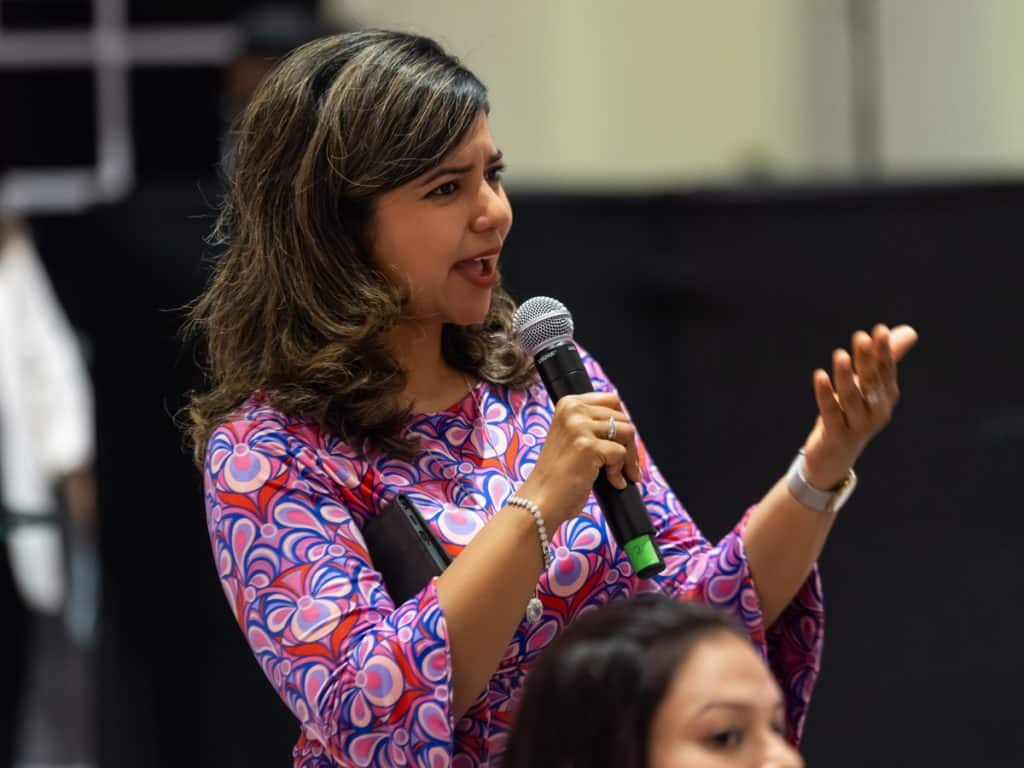
Drake & Scull’s GC El-Bayouk did not hold back. “Do not deliver training on AI if you do not know what you are talking about,” he said. “I have seen law firms pitch AI with obvious mistakes that kill credibility.” His take? Cautious optimism. “I would not trust it for law. But for turning something into a board pack? Absolutely.”
Bartolo was far more bullish. “We call ChatGPT our honorary team member,” she said. “We have built AI playbooks internally. It is not just about speed, it is about control.” Her team uses automation not only to streamline contract reviews but to empower non-legal colleagues with early issue spotting. “That way, when we get involved, it has already been filtered,” she said. “The efficiencies we are building in-house—we expect our law firms to match them.”
“The efficiencies we are building in-house—we expect our law firms to match them.”
—Daniela Bartolo, Careem
At ADNOC, Brownrigg—a tech lawyer by training—said the opportunity is real, but so is the hype. “AI cannot replace cross-border experience or context,” she said. “But it can take out the boring work. And that is a good thing.” She added that many AI discussions skip a critical first step: “What are you actually solving for? Sometimes the right tool is not AI, it is just better digital processes.”
Sabet, who pivoted from intellectual property (IP) to antitrust to align with regional shifts, said the larger point is mindset. “Do not wait to be the expert. Be uncomfortable with not knowing. That is how you grow.”
The future
The panel ended with a look ahead at how legal careers are evolving in the region, and what it will take to keep up.
“Gone are the days of the three-year expat plan,” said El-Bayouk. “Clients want long-term commitment to the region. Companies do too. If you are here, show that you are in it.” Brownrigg echoed the sentiment: “In-house legal teams now have real specialisms, real depth. We want advisors who can match that, who know this region and how it operates.”
“Gone are the days of the three-year expat plan. If you are here, show that you are in it.”
—Ahmed El-Bayouk, Drake & Scull International
Bartolo encouraged junior lawyers to move beyond summaries. “If you are advising on regulation, read the regulation. Know your fundamentals. Otherwise, you will stall fast.”
Finally, for those still navigating career choices, Sabet offered this advice: “It is a rollercoaster here. There is no precedent. Be open. Be flexible. Be willing to learn something new.”
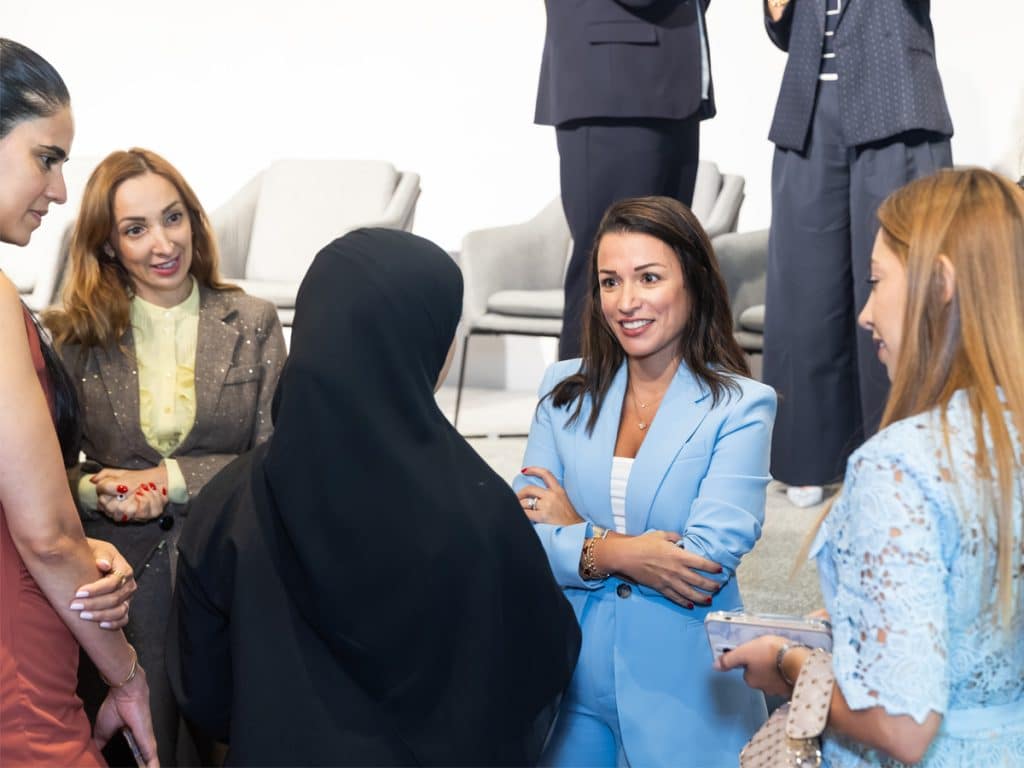
The inaugural Women in Law Forum 2025 was hosted by Law Middle East and headline sponsored by Al Tamimi & Company with support from partner Gibson Dunn. It took place on the morning of Tuesday June 24, 2025 in the Origami Ballroom at VOCO Dubai by IHG. Register for upcoming Law Middle East events.
This article was first published in the July-August 2025 print issue of Law Middle East.